
2004, το περιοδικό CodeOne (vol.19 No.2) επισκέπτεται την 111 Πτέρυγα Μάχης.
Φωτογραφίες Katsuhiko Tokunaga, κείμενο Eric Hehs.

Keraunos, Greek for lightning, refers to the thunderbolts flung by Zeus, the supreme ruler of Mount Olympus and overseer of the pantheon of gods who reside there. The Hellenic Air Force attaches the appellation to its 330 squadron at Nea Anchialos AB. The 330 Keraunos squadron proudly identifies itself as Greece's first F-16 squadron. The unit celebrated fifteen years in its fighting falcons in January 2004.
The 330th has three sister squadrons at Nea Anchialos, 346 Squadron (Jason, after the mythical Argonaut who searched for the Golden Fleece), 341 Squadron (Assos, Greek for Ace), and the 347 Squadron (Perseus, who cut the head off the Gorgon Medusa in Greek mythology). The 330th flies Block 30 F-16s and performs air defense missions. The 346th, an F-16 training unit, operates two-seat Block 30 F-16Ds borrowed from the 330th. The 341st flies Block 50 F-16s in the suppression of enemy air defense, or SEAD, role. All three squadrons fall under the 111 Wing of the Hellenic Air Force.

Greece has been a member of NATO since 1952 and has played an important role in defending NATO's southern flank. The 111th has a NATO commitment as well. The 341 Squadron is part of NATO's Rapid Reaction Force. Following NATO evaluations in 2005, all three operational squadrons at Nea Anchialos are expected to have NATO commitments.
Col. John Vizandios, who commands the 111 Wing, was one of the first F-16 pilots in the HAF. "I was fortunate to be in the initial team of six Greek pilots who received F-16 training in the United States in the late 1980s," he explains. "All six of us were on the runway here at Nea Anchialos in 1988 waiting for the first flight of F-16s to arrive." Vizandios is a former F-4 pilot. Other veteran HAF F-16 pilots have experience in the F-5, Mirage, and the F-104.

Nea Anchialos AB is located on the Adriatic coast just south of Volos, which is at about the midpoint between Athens to the south and Thessaloniki to the north, Greece's largest and second-largest cities, respectively. Nea Anchialos is in Greece's Pelion region, which is known as the land of the mythical Centaurs, creatures with a body half human and half horse. Today, the region is better known by tourists and locals for its beautiful combination of verdant mountains and clear blue sea. Nea Anchialos-based F-16 pilots are treated to stunning vistas from the best seat in the world.
The wing's diverse squadrons—flying SEAD, air-to-air, and air-to-ground missions—provide a unique training environment. "The 111th can create what amounts to a composite package with its own aircraft," notes Vizandios. "We don't need to ask for support or escort from other bases to provide realistic training. I expect that the Block 52+ squadrons being formed at Suda in Crete will have the same capability, but in a single F-16 type."
Col. Elias Venetis, the deputy base commander at Nea Anchialos, was also a member of the first six Greek pilots trained in the F-16. "When I was introduced to F-16, the biggest challenge was transitioning from a second-generation fighter, the F-5, to a third-generation fighter," Venetis recalls. "The F-16 was full of avionics and provided capabilities far beyond the F-5. Pilots transitioning to the F-16 had to change their way of thinking. Former F-5, F-4, and A-7 pilots had to forget old habits and learn new ones. This was the biggest challenge in training new F-16 pilots, which became the responsibility of our initial group of six. We did a good job. The HAF didn't have one accident or any major problems in these early stages of the program."

The HAF has added to and upgraded its F-16 fleet since the late 1980s. Beginning in 1996, Hellenic Aerospace Industry performed structural upgrades on its Block 30 fleet (purchased under the Peace Xenia I program). The upgrade, called Falcon-UP, prolongs the airframe lifetime from 4,000 hours to 8,000 hours. Peace Xenia II resulted in the purchase of the Block 50 F-16s now flying from two squadrons at Nea Anchialos.
Many of these HAF F-16s have been equipped with both LANTIRN and Litening pods as well as advanced electronic warfare suites. Greece ordered fifty new Block 52+ F-16s in June 2000 and exercised an option for an additional ten in 2001. These advanced F-16s, the first production Fighting Falcons delivered with conformal fuel tanks, began arriving in Greece in late 2003. The last of the sixty Block 52+ aircraft are scheduled to arrive in Greece in August 2004.
"The two Block 52+ F-16 units being formed on Crete are pulling some of our more experienced F-16 pilots from the three squadrons at Nea Anchialos," explains Lt. Col. Ioannis Podiotis, the commander of the 330 Squadron. "As a squadron commander, I am continuously trying to replenish this lost experience. We concentrate on increasing the skills of our newest F-16 pilots in a safe environment. Nea Anchialos is an ideal location for this training. We have many places to fly both air-to-air and air-to-ground missions. I'm satisfied with our F-16s. No, I love the F-16, especially the Block 30. I consider Block 30 as a perfect balance for air-to-air missions. It's a very capable platform."
Στο τεύχος Νοεμβρίου του περιοδικού Air International, διαβάζουμε το άρθρο του Κ.Παλουλιάν για τα τελευταία Corsair II όπου μεταξύ άλλων αναφέρονται και οι λόγοι που οδήγησαν στην απόσυρση του τύπου.

Tο 2013 υπήρχαν σκέψεις ώστε η επιχειρησιακή εκμετάλλευση των αεροσκαφών να παραταθεί, με την απόσυρση τους να πραγματοποιηθεί κάποια στιγμή την τριετία 2015 - 2018. Παρόλα αυτά έπειτα από σχετική μελέτη που ολοκληρώθηκε στις αρχές του 2014, η ημερομηνία του "τέλους" οριστικοποιήθηκε για το Νοέμβριο του ίδιου έτους.
Tο 2013 υπήρχαν σκέψεις ώστε η επιχειρησιακή εκμετάλλευση των αεροσκαφών να παραταθεί, με την απόσυρση τους να πραγματοποιηθεί κάποια στιγμή την τριετία 2015 - 2018. Παρόλα αυτά έπειτα από σχετική μελέτη που ολοκληρώθηκε στις αρχές του 2014, η ημερομηνία του "τέλους" οριστικοποιήθηκε για το Νοέμβριο του ίδιου έτους.
Σύμφωνα με το ίδιο άρθρο, η ανώτατη ηγεσία της ΠΑ δεν επιθυμούσε να αποσύρει τα Βομβαρδιστικά, η έλλειψη όμως που παρουσίαζαν παγκοσμίως συγκεκριμένα απάρτια του εκτινασσόμενου καθίσματος αλλά και του κινητήρα Allison TF41 - μοναδικός χρήστης η ΠΑ - δεν άφηνε πολλές επιλογές, "κλειδώνοντας" έτσι την ημερομηνία απόσυρσης τους...

Ανακοινώθηκε από την EagleAviation η κυκλοφορία του νέου λευκώματος για τα 25 χρόνια της 332 Μοίρας.
Διαθέσιμο από τις 5 Νοεμβρίου

"39
χρόνια και 125 αεροσκάφη, 5 Μοίρες βομβαρδισμού, 355.000 αποστολές και
440.000 ώρες στον αέρα, με βαρύ τίμημα την απώλεια 13 ιπταμένων.
Τεχνολογία αιχμής, για την εποχή του, με Head-Up Display, ολοκληρωμένο αδρανειακό σύστημα ναυτιλίας υψηλής ακρίβειας και τακτικό ηλεκτρονικό υπολογιστή που επέτρεπε την εκτέλεση βολών αέρος-εδάφους με πολύ μεγάλη ακρίβεια. Εξελιγμένο radar που έδινε τη δυνατότητα χαρτογράφησης, αποκάλυψης και προσβολής στόχου χωρίς να απαιτείται οπτική επαφή με αυτόν, ενώ παρείχε πληροφορίες παρακολούθησης και αποφυγής του ανάγλυφου του εδάφους.
Αξεπέραστη αυτονομία και μεγάλη ισχύς πυρός, δυνατότητα εναέριου ανεφοδιασμού και εκτέλεσης νυκτερινής ναυτιλίας χαμηλού ύψους και προσβολής στόχων. Τα εξαιρετικά πτητικά χαρακτηριστικά σε χαμηλό ύψος πτήσης, η στιβαρή - ανθεκτική κατασκευή και η ευκολία πρόσβασης στα υποσυστήματα του, το κατέστησαν ιδιαίτερα αγαπητό στους Τεχνικούς που το εξυπηρέτησαν και στους Ιπταμένους που το πέταξαν, αναδεικνύοντας το σε σημαντική δύναμη αποτροπής και διασφάλισης της εθνικής ακεραιότητας και ανεξαρτησίας."
Απόσπασμα από το βιβλίο αφιέρωμα στα Α-7 Corsair II με ιστορικό του αεροσκάφους με ξένα και Ελληνικά εθνόσημα και με περισσότερες από 300 φωτογραφίες, οι περισσότερες από αυτές σπάνιες και ανέκδοτες, προερχόμενες από τα αρχεία της Vought, το Μουσείο της Π.Α, τα αρχεία των Μοιρών που το πέταξαν, αρχεία στελεχών της Π.Α αλλά και αρχεία φανατικών συλλεκτών και spotter. Φωτογραφική κάλυψη σχεδόν όλων των serial number των Ελληνικών αεροσκαφών και πίνακες με την πορεία κάθε αεροσκάφους.
Ένα βιβλίο σταθμός για ένα αεροσκάφος θρύλο στην ιστορία της Π.A...
Θ.Α.
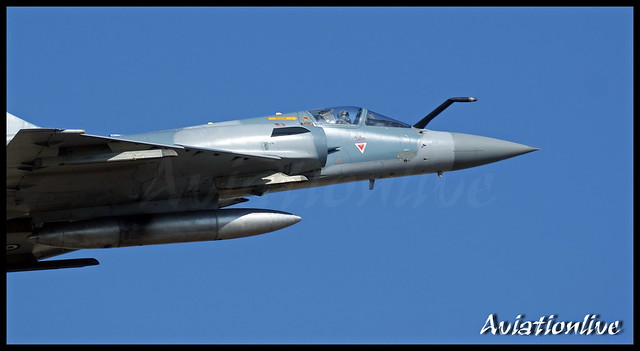 |
Ένα μικρό απόσπασμα από πρόσφατο άρθρο του Ι. Λέκκα στο περιοδικό Combat Aircraft Montly με αφορμή την συνεκπαίδευση-συνεργασία της USAFE με τις Μοίρες του ΑΤΑ.
The Eagle drivers were particularly surprised by the Mirage 2000-5’s radar and missile capabilities
and the performance of the pilots operating the older version of them F-16 in Greek service,the Block 30.
 |
| (C) Mike Green |
Ο Mike Green, μέλος και συντάκτης της ISAP (International Society of Aviation Photographers) επισκέφθηκε την 120 Πτέρυγα Εκπαίδευσης Αέρος στη Καλαμάτα και κατέγραψε την ημερήσια δραστηριότητα της Πτέρυγας.
 |
| (C) Mike Green |
Από το άρθρο του φωτογράφου ξεχωρίζει η αναφορά για την κατασκευή νέων στεγάστρων για την προστασία των T-6A & NTA από τις καιρικές συνθήκες αλλά και η πρόθεση-φήμη απόκτησης μεταχειρισμένων MB.339A από την ΑΜΙ (Aeronautica Militare Italiana) όταν αυτά αποσυρθούν.
Περισσότερες φωτογραφίες θα βρείτε εδώ.
 |
| TLP 10-3 : ICE της Luftwaffe ανεφοδιάζεται, σε πρώτο πλάνο διακρίνεται ένα Block 50 της 341Μ |
Aπό τον εκδοτικό οίκο Key κυκλοφόρησε η μονογραφία 135 - The World's Greatest Tanker...and more... η οποία περιλαμβάνει μεταξύ άλλων, άρθρο τεσσαρων σελίδων για τον ανεφοδιασμό ζεύγους αεροσκαφών της 341Μ "Βέλος" στο πλαίσιο της συμμετοχής τους στο TLP 10-3.
Στην 115 ΠΜ βρέθηκε ο Tom Gibbons για λογαριασμό του περιοδικού Global Aviation Magazine. Ορισμένες από τις φωτογραφίες που συνόδευσαν το άρθρο του (Chania Air Base, Crete, Greece) ανέβηκαν στον ιστότοπο Airfighters.com.


 |
To επίσημο περιοδικό της Airbus Helicopters μπορείτε να το διαβάσετε εδώ.
|

Το επίσημο περιοδικό της Γαλλικής Αεροπορίας αποχαιρετά τα Mirage F1...

 |
| (C) Stefano Monteleone |
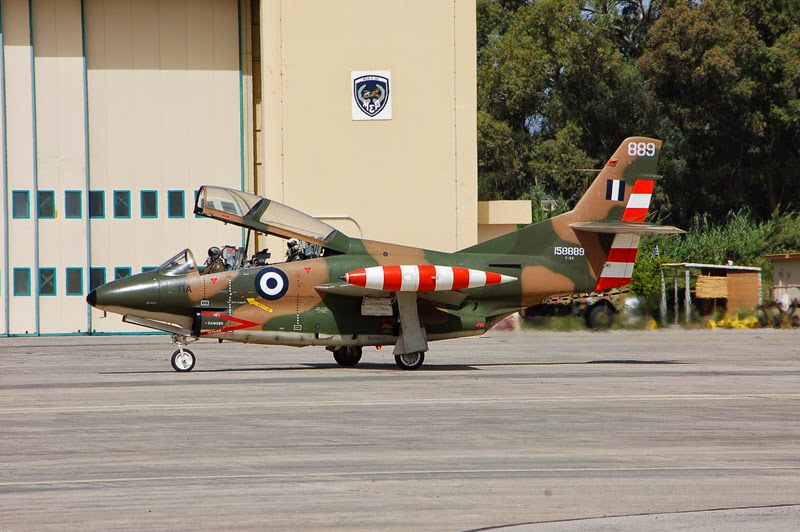
Περι τα τέλη Ιουνίου ο Stefano Monteleone, απεσταλμένος του Ιταλικού ηλεκτρονικού περιοδικού Aviation Report βρέθηκε στην 120 ΠΕΑ και κατέγραψε την δραστηριότητα της Πτέρυγας. Περισσότερες φωτογραφίες αλλά και το άρθρο του Stefano Monteleone υπάρχουν εδώ.
 |
| (C) Stefano Monteleone |
11 Μαρτίου 1941.....Το «Fairey Battle» με διακριτικό νηολογίου κλήσεως Β - 274 και με πλήρωμα τους Επισμηναγό (ΙΓΥ) Δημήτριο Σταθάκο και τον Σμηναγό (ΙΓΥ) Δημήτριο Πιτσίκα, μέσα στον μουντό και συννεφιασμένο ουρανό, έδινε την τελευταία του μάχη, με άνισους όμως όρους….
Τα Ιταλικά καταδιωκτικά σαν μύγες το είχαν περικυκλώσει και το πολυβολούσαν με μανία, παρά τις απεγνωσμένες προσπάθειες των Ελλήνων Αεροπόρων που προσπαθούσαν να απεγκλωβιστούν ανταποδίδοντας τα πυρά με σκοπό να ανοίξουν δίοδο διαφυγής. Οι Ιταλοί σε μιά τελευταία προσπάθεια το κτυπούν καίρια και το αεροπλάνο με δύο από τους καλύτερους Αεροπόρους της ΕΒΑ, άρχισε να χάνει ύψος και .... τέλος.

Ήταν 11 Μαρτίου 1941. Η 33η ΜΕΒ της Αεροπορίας μας έχανε τον Μανιάτη Υποδιοικητή της Δημήτριο Σταθάκο και τον Δημήτριο Πιτσίκα, δυο από όλες τις πλευρές, άξιους και ικανούς αξιωματικούς της. Πιστοί στον όρκο τους και στα ιδανικά της Πατρίδας δεν δίστασαν να μπούν μπροστάρηδες και να κονταροχτυπηθούν στα μαρμαρένια αλώνια των Αιθέρων, κοιτώντας κατάματα τον Θάνατο! Ο Στρατός μας έδωσε σκληρή μάχη για να μην περιέλθουν τα άψυχα σώματα τους στους Ιταλούς εισβολείς, εκεί βόρεια της Τρεμπεσίνας.
Εκεί και ετάφησαν και τόσα έτη θεωρούνται ακόμη επίσημα αγνοούμενοι. Ενώ μια μάχη λοιπόν τότε τελείωσε Νικηφόρα μια άλλη μάχη άρχισε αμέσως μετά με αντίπαλο τις γραφειοκρατικές και όποιες άλλες αγκυλώσεις και σκοπιμότητες και συνεχίζεται έως τώρα. Αυτοί όμως περιμένουν υπομονετικά να γυρίσουν στην Πατρίδα που τους γέννησε που για αυτήν έδωσαν την ζωή τους. Έως πότε όμως;
73 έτη ακριβώς μετά, ένα σημαδιακό γεγονός θα έλθει να φωτίσει, με την λόγχη της πένας, αυτή την φορά, και την ανθρώπινη οξυδέρκεια, υπομονή και επιμονή, τα γεγονότα της δράσης, τις επιτυχίες αλλά και τις πικρές στιγμές μιάς λίαν αξιόμαχης Ελληνικής Μοίρας Βομβαρδισμού κατά το 1940-41, της 33ης.
Μία κοπιαστική έρευνα - μελέτη 12 ετών, μέσα από τις Συμπληγάδες της πατροπαράδοτης Ελληνικής Γραφειοκρατίας , τις παλινωδίες των (α)διαφόρων στον δρόμο γιά την έκδοσή της, στηριγμένη σε εκατοντάδες έγγραφα, διεθνή και Ελληνική βιβλιογραφία, ζωντανές μαρτυρίες όπως του Μανιάτη (εκ Μίνας Μέσα Μάνης) Σαράντου Σκάντζικα του μοναδικού σήμερα εν ζωή Παλαίμαχου Αεροπόρου, 99 ετών, αυτής της Μοίρας, καθώς και σε άλλες μαρτυρίες εξ ίσου σημαντικών από απόψεως γνώσεως των γεγονότων της μακρινής πιά εποχής, σε χάρτες του τότε, σε αναπαραστάσεις των επιχειρήσεων, σε περιγραφές των διαδρομών τους και σε ένα κατά κύριο λόγο, ανέκδοτο φωτογραφικό υλικό 350 φωτογραφιών/σχεδίων, έδωσε τελικά καρπό ένα έργο 300 σχεδόν σελίδων, μοναδικό λιθαράκι στην αποτύπωση της Ιστορίας μας και στον ηρωϊκό αγώνα των Αεροπόρων μας, προϊόν των εκδόσεων «ΑΩ»...

Οκτώβριος 2005, ο Eric Hechs και ο Katsuhico Tokunaga, για λογαριασμό του περιοδικού CodeOne επισκέπτονται την 115 Πτέρυγα Μάχης για να καταγράψουν την αξιοποίηση των τότε νέων F-16 Block 52+. Ο Erich Hechs θα μας μεταφέρει τους έντονους ρυθμούς λειτουργίας της Πτέρυγας, τις σκέψεις των χειριστών για το νέο αεροσκάφος και τις CFT αλλά και τις σκέψεις για την αξιοποίηση της πίσω θέση του "D" από ΧΟΣ που δυστηχώς δεν προχώρησαν...
Παράλληλα ο Katsuhiko Tokunaga την περίοδο εκείνη θα πραγματοποιήσει μια από τις καλύτερες - αν όχι την καλύτερη - εναέρια φωτογράφιση Ελληνικών μαχητικών... τo Ελληνικό D "Missionised" με τις σύμμορφες δεξαμενές καυσίμου, έγινε εξώφυλλο στο CodeOne 2006 vol.21 και το διαδίκτυο πλημμύρισε με φωτογραφίες των γερακιών της 115 ΠΜ.
Παράλληλα ο Katsuhiko Tokunaga την περίοδο εκείνη θα πραγματοποιήσει μια από τις καλύτερες - αν όχι την καλύτερη - εναέρια φωτογράφιση Ελληνικών μαχητικών... τo Ελληνικό D "Missionised" με τις σύμμορφες δεξαμενές καυσίμου, έγινε εξώφυλλο στο CodeOne 2006 vol.21 και το διαδίκτυο πλημμύρισε με φωτογραφίες των γερακιών της 115 ΠΜ.

Το κείμενο του Eric Hechs όπως δημοσιεύθηκε στο Code One :
A popular destination for Greek and other European tourists, Crete is known for its caves, Minoan ruins, beautiful beaches, mountainous countryside, and scenic Mediterranean vistas. Vacationers come to this Greek island to relax and enjoy the more leisurely island pace.
Hellenic Air Force pilots and personnel come to Souda AB, which is located on the northern shore of Crete, to generate sorties in the new Block 52+ F-16s. "We are preparing for twenty-six sorties today," says Capt. Adam Mitsotakis, chief maintenance officer of the 340 Squadron at Souda. "We average about twenty-three sorties per day for 340 Squadron alone. Last week my squadron flew 115 sorties. We have two days of night flying this week. We also have to support our alert aircraft, which must be ready to scramble at a moment's notice."
340 Fox Squadron and 343 Star Squadron constitute the 115th Wing at Souda AB, which shares a runway with the commercial airport that serves Chania, the island's second-largest city. The wing, which has fully converted from A-7 Corsair IIs to the Block 52+ F-16 in the last two years, is commanded by Col. Ioannis Kortogiannis. "Both of our squadrons operate at an impressive pace," says Kortogiannis. "But what is most impressive about our activities here at Souda is how quickly the Hellenic Air Force has incorporated this advanced fighter into its operations."
Quickly, indeed. The Greek government announced its selection of the Block 52+ F-16 in April 1999. The program, called Peace Xenia III, involved the purchase of fifty aircraft with an option for an additional ten. The letter of agreement, formalizing the purchase, was signed in March 2000. The contract was issued to Lockheed Martin in June 2000. The option for the ten additional aircraft was exercised in September 2001.

The first aircraft was delivered on schedule October 2002 in a record span time of only twenty-eight months after the initial contract was issued. The first Block 52+ aircraft arrived at Souda AB in June 2003. The Hellenic Air Force, or HAF, declared its two squadrons at Souda operational in April 2004. The last of the sixty aircraft purchased was delivered to the base the following June.
"Some of our first operational missions involved protecting the 2004 Summer Olympic Games," notes Kortogiannis, who has 1,400 hours in the HAF's earlier Block 30 F-16s, and more than 300 hours in the Block 52+. "The Souda-based F-16s covered the games in Athens and in nearby Iraklion, Crete's largest city. The 24-7 coverage typically involved launching and recovering two aircraft every three hours."
"I had the honor of flying some of the missions," says Lt. Col. George Fasoulas, 343 Squadron commander. "Though important, the Olympic Game missions were somewhat boring — flying big circles over a large area night and day. We were too high to see any events." The HAF Block 52+ weren't the only fighters in the air. "The Olympics were protected by all of the interceptor squadrons of the HAF," continues Fasoulas, "including our F-4 squadrons and F-16 squadrons from other bases."
Advanced 4th generation capabilities
Today, Fasoulas and his fellow F-16 pilots at Souda are focused on mastering some of the more advanced features of their Block 52+ jets. "Our capabilities with this aircraft go a step beyond your standard F-16," notes Fasoulas. "We are just beginning to incorporate some of the systems associated with precision-guided munitions."

While some of these capabilities are relatively new to the squadrons, they have been operating from Day One with most of the other capabilities made possible by the Block 52+. The Northrop Grumman radar tends to get the greatest accolades. "The radar is superb," Fasoulas continues. "US Air Force pilots who delivered the aircraft to Souda told us how lucky we are to have such a radar. They said they were most impressed by its range because they could see air traffic at huge distances. Those comments made us appreciate the unique capabilities we have with this aircraft."
While a major improvement, the radar does not change the external appearance of the Block 52+. The conformal fuel tanks, or CFTs, on the other hand, alter the appearance of this F-16 radically. The two tanks, which are attached on the upper fuselage, give the Block 52+ a muscular look. More importantly, they add about 3,000 pounds of fuel without sacrificing a weapon station.
"We had some hesitation with the CFTs in the beginning because we knew so little about them," admits Fasoulas. "We didn't know how the airplane would behave with the extra weight. But we discovered the airplane behaves perfectly. The CFTs are favored by most of the pilots because they can fly longer and go farther. And they experience virtually no difference in the handling characteristics. We can still pull nine g's with the CFTs.
"In fact, the Block 52+ has similar handling characteristics to our Block 30 and Block 50 F-16s," Fasoulas continues. "Handling is actually a little calmer, which has nothing to do with the CFTs. I sense that the Block 52+ has a more evolved flight control system."

"The extra range benefits the air-to-ground missions slightly more than the air-to-air missions because range is more critical for those missions," Fasoulas adds. "Still, the tanks also benefit air-to-air missions because the pilots can patrol for longer periods.
"The CFTs extend the duration of our missions. The actual time depends on the profile," adds Capt. Padelis Zambakolas, a pilot with 340 Squadron. "They can extend range for hundreds of miles as well."
All two-seat Block 52+ F-16s feature a dorsal fairing designed to create space for avionics normally contained behind the pilot on single-seat aircraft. The fairing has room for additional avionics and chaff and flare dispensers as well. However, the most distinguishing feature of the Block 52+ two-seater is the ability to display mission-critical information in the backseat. This feature allows a backseater to act as a weapons system operator, or WSO; that is, to concentrate on or to control weapons or sensors from the backseat while the pilot operates the aircraft from the front seat.
"A missionized backseat is nothing new for the Hellenic Air Force," Fasoulas says. "We have flown weapons system operators for years in the backseat of our F-4 aircraft. However, with the Block 52+ F-16s, we don't have dedicated WSOs as we do with the F-4s. Instead, we fly our two-seat F-16s with two combat-ready pilots."The HAF is evaluating ways to capitalize on the capabilities offered by a missionized backseat.

Night vision goggles, helmet-mounted displays, and other systems and weapons will affect those evaluations as these capabilities are added to the aircraft.
"Other air forces operate F-16s with missionized backseats," says Michopoulas. "But each one has learned how to get the most out of such a capability on its own. The backseater controls his multifunction displays. He can change the sensor of interest independently from the pilot in the front seat. So far, the system appears to be most beneficial in combat situations that require a heavy workload on a single pilot."
Even though they have been operational for a relatively short time, pilots and personnel from Souda have deployed their advanced F-16s to other countries, among them Italy, Norway, and the Netherlands. "Our most recent deployment to Italy involved flying both day and night missions in Operation Destined Glory in Sardinia," explains Capt. Michail Koukouvas. "We flew as interceptors in air-to-air missions and shot simulated air-to-ground missiles during suppression of enemy defense missions. We gained a lot from that experience."
The experience enlightened other NATO pilots as well. "They are interested in our color displays and in the improved situational awareness the Block 52+ radar provides," adds Capt. Charalambos Eskioglou. "They want to see how our data link works. The detection ranges impress them. They are also impressed with our debriefings because our in-flight data recorder captures information from all sensors for the entire duration of the mission."

Maintaining High Standards
As pilots at Souda come up to speed with all the new capabilities offered by their advanced F-16s, maintenance personnel at the base have to keep up with the rigorous flying schedule. They are also learning how these new capabilities affect their own responsibilities. To meet the needs of the new aircraft, the HAF is also modernizing the infrastructure at Souda. New facilities include two squadron operational flight buildings, an avionics intermediate shop, two maintenance hangars, a fuel facility, a wash/paint facility, and a LANTIRN shop.
"Because the F-16 Block 52+ is the most advanced aircraft flown in the Hellenic Air Force, the HAF has given us some of the best mechanics," explains Mitsotakis, who has about ninety maintainers reporting to him in his lead maintenance role with 340 Squadron. "The quantity of personnel may be small, but their quality and experience levels are very high. Sixty percent are maintainers from previous F-16 blocks."
Fortunately, the airplane itself helps out. Troubleshooting is faster and easier because the Block 52+ provides more information to technicians in the form of more detailed fault codes.
Manufacturers are also providing technical support. "The A-7 didn't include support from the US Navy or from its original manufacturer, so we had to rely on — or develop — our own expertise," says Mitsotakis. "For the F-16, we have our friends at Lockheed Martin and Pratt & Whitney here on base to help us. That has created a very good situation."

"The airplanes are performing beyond our expectations," says Fasoulas, who has been at Souda since the first F-16 arrived. "We have been flying day and night for the last two weeks and haven't seen a single system failure. We expected the engines to perform well because American squadrons were having such good experiences with the Pratt & Whitney F100-PW-229s, but we are seeing similar performance with the aircraft as well. On our deployment to Sardinia, we flew four aircraft twice a day. We took some engineers with us, but most of them were not needed. Technicians who accompanied us on the deployment got to enjoy a nice vacation in Sardinia."
Creating Advanced Pilots
Some of the missions flown from Souda are for training pilots who are new to the Block 52+. The base has a dedicated replacement training unit, the 115 SMET, for training newly graduated pilots and pilots experienced in A-7, F-4, and F-5 units.
"We get our instructor pilots and our aircraft from the two squadrons here," says Lt. Col. Demetrius Sideridis, commander of the 115 SMET. "We have eight SMET instructors who train twelve to fifteen students per year. The training requires about fifty flights and lasts about ten months. Pilots from A-7s have some avionic experience applicable to the F-16 because our A-7s have a head-up display. Experienced F-4 and F-5 pilots, that is, those with 100 hours or more flying time, don't have problems with the transition."
Transition training for pilots coming from other Block 30 or Block 50 F-16 units is done in the two operational squadrons. Transitioning from Block 50 to Block 52+ requires roughly four flights and about thirty to fifty hours of classroom instruction. "The transition for existing F-16 pilots depends on their flight experience," adds Sideridis. "The Block 50 is similar to the Block 52+ in many respects. The Block 30, on the other hand, doesn't have a horizontal situation display and the advanced avionics found in the 50 and 52+."

The squadrons and the training unit make use of a modern F-16 simulator on the base for realistic ground training. The 180-degree field of view simulator has a full-up Block 52+ cockpit with realistic visual presentations. The training unit has its own desktop simulator as well.
"Generating new Block 52+ pilots is extremely important at this point in our development," says Sideridis. "Our air force initially had two F-16 squadrons that we split into four squadrons when the Peace Xenia II Block 50 aircraft arrived in 1997. As soon as we recovered from that expansion, we had to create two more F-16 squadrons here at Souda. These Block 52+ F-16s have an even greater capability, so our current challenge is to create new pilots for a more advanced aircraft. We're handling the challenge quite well."
"Souda is a new air base," says Col. Kortogiannis as he peers out a window of his office in the 115 Wing headquarters building, "and Crete is isolated from the rest of Greece. Most of our personnel are not from here, so they have to fly or use the ferry to see their families — when they can. Our other F-16 wing, the 111th at Nea Anchialos, has set very high standards for the Hellenic Air Force. Within the 115 Wing, we have to merge a lot of pilots with experience in many aircraft types with a few pilots experienced in the F-16. Once we catch up with the experience levels of our other F-16 units, we can begin taking advantage of the new capabilities this aircraft has to offer. Our contributions will make a huge difference for the Hellenic Air Force."
Φωτογραφίες Κ. Tokunaga
29 Σεπτεμβρίου - 10 Οκτωβρίου 2002, στο πλαίσιο προγράμματος Ανταλλαγής Μοιρών 4 Mirage2000 RDI της EC 1/5 Vendee μεταστάθμευσαν στη Τανάγρα και συνεκπαιδεύτηκαν με τα Mirage 2000 της 114ΠΜ. Από το περιοδικό Engage :


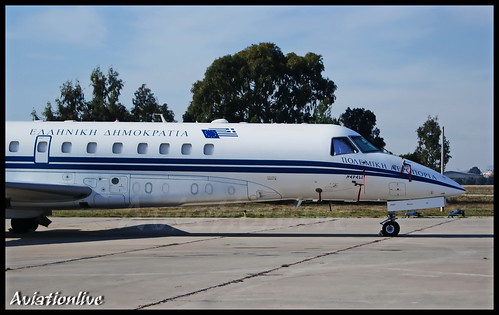 |
Ίσως η πλέον ενδιαφέρουσα είδηση που διαβάσαμε στο ALMANAC 2013 - 2014, αφορά την επιτελική μελέτη για την μετατροπή του ΕΜΒ-135BJ σε πλατφόρμα μεταφοράς διατάξεων Ηλεκτρονικού Πολέμου.
Σχετική αναφορά φιλοξένησε και το AFM Ιουλίου, ειδικότερα αναφερόταν πως για το ΕΜΒ-135BJ της 352ΜΜΥΠ, εξετάσθηκε το ενδεχόμενο να χρησιμοποιηθεί σε ρόλο ELINT (Εlectronic Ιntelligence) αφού πραγματοποιηθούν σε αυτό περιοριμένης έκτασης μετατροπές.
Από το αρχείο Tsimuha, η έλευση των Phantom, Corsair και των F1 μέσα από σκίτσα του Επισμηναγού Χρυσικάκη που δημοσιεύθηκαν στο υπηρεσιακό περιοδικό της ΠΑ, ''Η Πτήση''.


Το 2009 το περιοδικό AFM φιλοξένησε μια σπάνια μαρτυρία χειριστή. Ο Σμήναρχος ε.α. Γεωργιάδης Παναγιώτης με κείμενο του, περιέγραφε στους αναγνώστες του περιοδικού μια ''καθημερινή'' ημέρα στο ΒΑ Αιγαίο... αντιμετωπίζοντας τα - τότε - υπερσύγχρονα F-16 Block 30 & Block 40 της ΤΗΚ με τα υποδεέστερα F-5A & ΝF-5Α της 343 ΜΑΗ ''Αστέρι'' .Τα όπλα τους, τα μάτια τους, το ένστικτο τους και οι τακτικές που είχαν αναπτύξει.
Σε ένα από τα δυνατότερα κείμενα που έχουν γραφεί, ο συγγραφέας μας ''μεταφέρει'' τις συνθήκες και τις προκλήσεις που αντιμετώπιζε στον αέρα ο ιπτάμενος της εποχής. Περισσότερα στις σελίδες που ακολουθούν :
Σε ένα από τα δυνατότερα κείμενα που έχουν γραφεί, ο συγγραφέας μας ''μεταφέρει'' τις συνθήκες και τις προκλήσεις που αντιμετώπιζε στον αέρα ο ιπτάμενος της εποχής. Περισσότερα στις σελίδες που ακολουθούν :


 |
| Αδιάψευστος μάρτυρας για το αποτέλεσμα της αερομαχίας, το φωτοπολυβόλο... |

Πρόσφατα Σχόλια